As websites expand into thousands or tens of thousands of published articles, product listings, and technical resources, webmasters inevitably face the architectural challenges of large-scale indexation. Managing discovery across massive URL inventories requires adhering to official search engine specifications, deploying hierarchical sitemap indexes, and forensically diagnosing crawl telemetry in Google Search Console.
A frequent point of confusion among webmasters transitioning from hosted blogging platforms to modern CMS architectures is sitemap capacity limits. While certain legacy feed engines (such as RSS or Atom feeds) artificially truncate output at 500 entries per request, Google’s official sitemap protocol is dramatically more expansive. In this technical architectural guide, we dissect the official 50,000-URL standard, explain Sitemap Index structures, detail Gzip compression techniques, and provide a forensic framework for resolving Search Console coverage discrepancies.
1. Google’s Official XML Sitemap Protocol vs. Platform Feed Limits
The web-wide standard for XML sitemaps is governed by the sitemaps.org protocol, officially adopted and supported by Google, Microsoft Bing, Yahoo, and Yandex. According to official Google Search Central documentation, a single standard XML sitemap file can contain:
- Up to 50,000 URLs in a single document.
- A maximum uncompressed file size of 50 MB.
If your website contains fewer than 50,000 indexable URLs and your uncompressed XML file remains under 50 MB, Googlebot can easily process the entire catalog through a single sitemap file. The notorious “500-URL limit” that many creators encounter is not an architectural limit of Google Search; it is a platform-specific constraint of legacy hosted feed engines (such as Blogger Atom feeds, which cap max-results at 500 per feed parameter). On modern WordPress installations powered by plugins like Rank Math SEO, sitemaps operate natively under the robust sitemaps.org standard.
| Sitemap Architecture | Maximum URLs Per File | Maximum File Size | Recommended Use Case |
|---|---|---|---|
| Single XML Sitemap | 50,000 URLs | 50 MB (Uncompressed) | Small to mid-sized sites (< 50,000 URLs) |
| Modular Sitemap Index | 50,000 Sitemaps (2.5B URLs) | 50 MB per Index file | Publications, e-commerce, high-volume portals |
| Legacy Hosted Feed | 500 entries per request | Variable | Legacy platforms requiring feed pagination |
2. The Sitemap Index Hierarchy (<sitemapindex>)
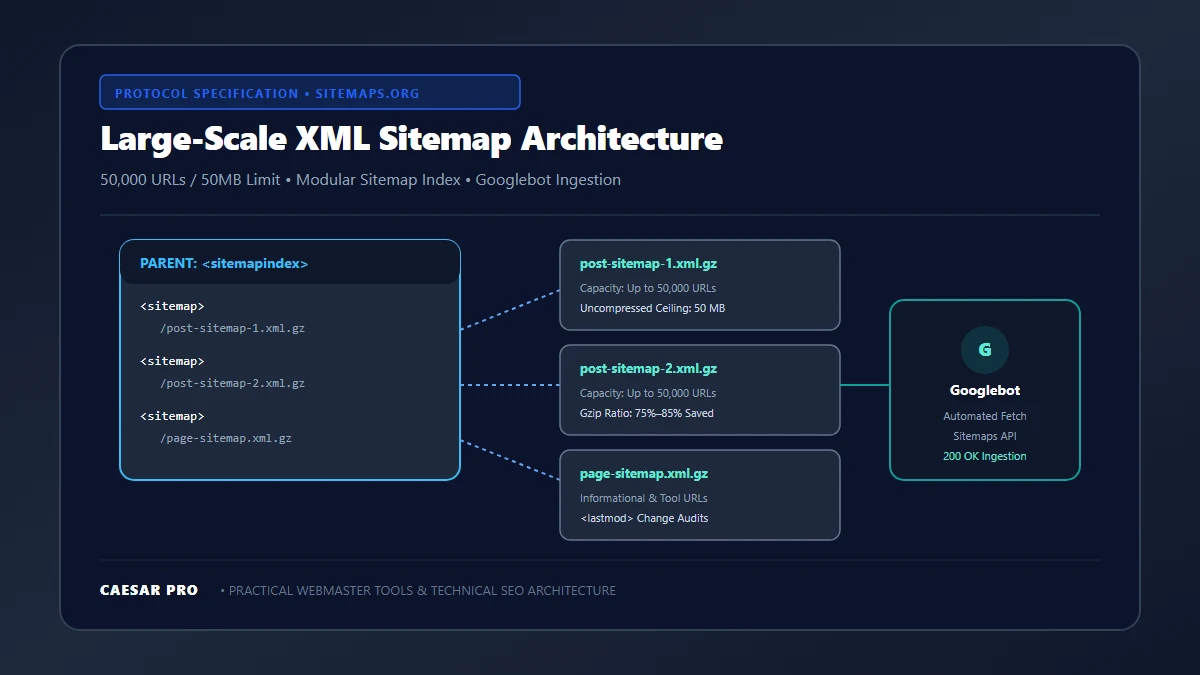
When a website surpasses 50,000 URLs—or when an enterprise publication wishes to segment content for granular crawl monitoring—Google requires a Sitemap Index file. A sitemap index uses the <sitemapindex> XML root tag and contains pointers to individual child sitemaps:
<?xml version="1.0" encoding="UTF-8"?>
<sitemapindex xmlns="http://www.sitemaps.org/schemas/sitemap/0.9">
  <sitemap>
    <loc>https://www.caessarpro.com/post-sitemap.xml</loc>
    <lastmod>2026-11-20T20:00:00+00:00</lastmod>
  </sitemap>
  <sitemap>
    <loc>https://www.caessarpro.com/page-sitemap.xml</loc>
    <lastmod>2026-11-20T18:30:00+00:00</lastmod>
  </sitemap>
  <sitemap>
    <loc>https://www.caessarpro.com/category-sitemap.xml</loc>
    <lastmod>2026-11-20T12:00:00+00:00</lastmod>
  </sitemap>
</sitemapindex>
This hierarchical architecture provides three major technical advantages:
- Granular Crawl Budget Allocation: Googlebot inspects frequently updated child sitemaps (such as daily editorial posts) multiple times per day, while infrequently changing utility pages (such as contact, terms, and tools) are polled on slower cadences.
- Isolated Error Diagnostics: If syntax errors or schema validation warnings occur, they are isolated to a single child file rather than causing the crawler to drop your entire website’s sitemap.
- Memory Efficiency: The web server does not have to assemble a massive multi-megabyte database query on every crawler visit; each sub-sitemap generates in lightweight batches.
3. Gzip Compression and Server Bandwidth Optimization
For high-volume portals, serving uncompressed XML consumes substantial server bandwidth and memory. The sitemaps.org specification officially mandates that crawlers accept Gzip-compressed sitemaps ending in .xml.gz.
Gzip compression achieves a 75% to 85% reduction in sitemap file size. An XML sitemap containing 10,000 URLs that measures 4.2 MB in raw text compresses to approximately 650 KB. This drastically reduces Time to First Byte (TTFB), prevents PHP worker exhaustion on high-concurrency crawl sweeps, and allows Googlebot to download and parse your index in a fraction of the time.
4. Forensic Analysis of Search Console Coverage Telemetry
Submitting your sitemap index to Google Search Console is only the starting point. The real value lies in analyzing Google’s subsequent Page Indexing Report:
| Search Console Coverage Status | Root Technical Cause | Prescribed Engineering Remedy |
|---|---|---|
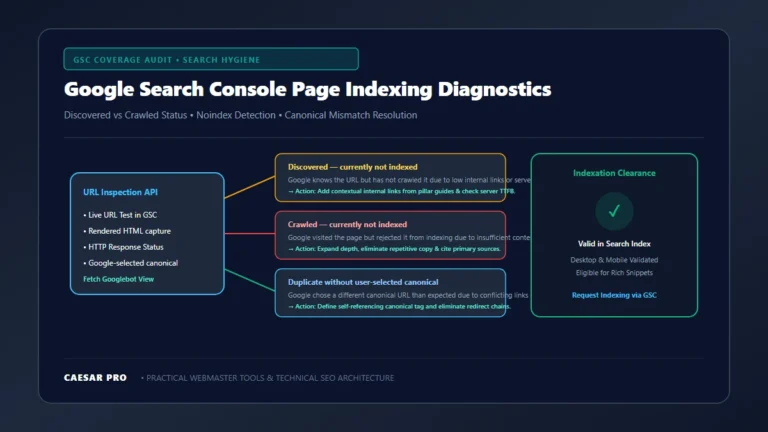
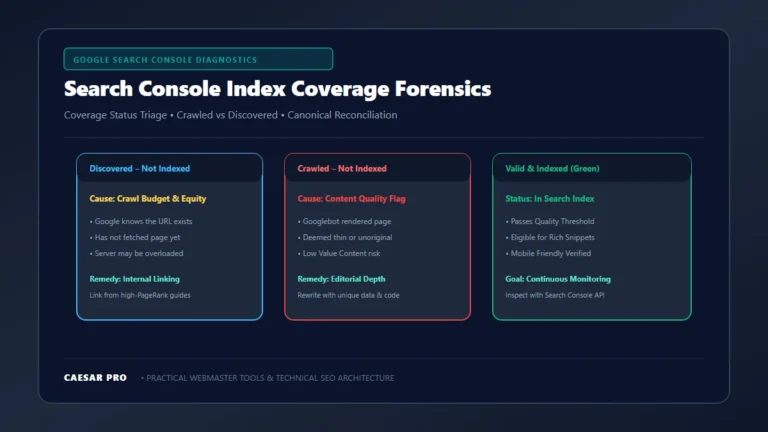
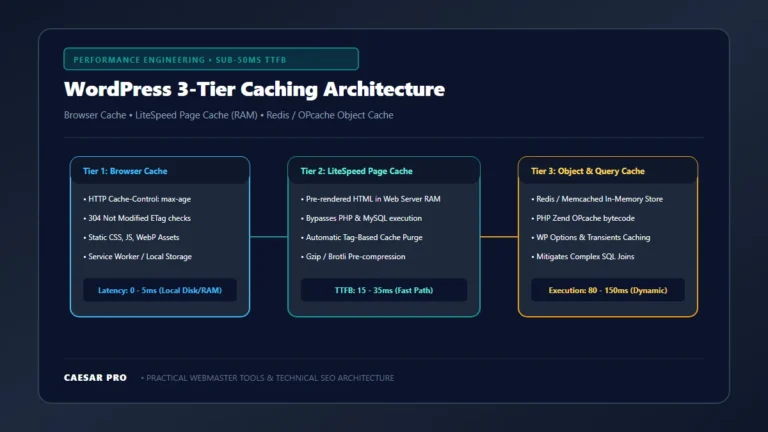
| Discovered – Currently Not Indexed | Crawler found the URL via sitemap but deferred fetching due to server latency or low internal link equity. | Strengthen internal link pathways from top-level guides and optimize server TTFB as explained in our WordPress Caching Architecture Guide. |
| Crawled – Currently Not Indexed | Googlebot retrieved and rendered the page, but algorithmic quality evaluations deemed it insufficiently valuable. | Expand editorial depth, eliminate boilerplate phrasing, and add unique practical data following our Fixing Low Value Content Guide. |
| Duplicate without User-Selected Canonical | Sitemap contains a URL variant with query strings or inconsistent trailing slashes. | Sanitize sitemap output to include strictly 100% canonical URLs as detailed in Canonical URLs Explained. |
5. Modern Invalidation: From Sitemap Pings to IndexNow
Historically, webmasters notified search engines of new content by sending HTTP GET requests to Google’s public ping endpoint (google.com/ping?sitemap=...). In late 2023, Google officially deprecated the sitemap ping endpoint due to widespread webmaster abuse. Today, reliable discovery relies on:
- Accurate
<lastmod>Timestamps: Googlebot uses the<lastmod>tag to detect modified content. Ensure timestamps use the W3C Datetime format (ISO 8601:YYYY-MM-DDThh:mm:ss+00:00). - The IndexNow Protocol: Supported by Microsoft Bing, Yandex, and Naver, IndexNow allows WordPress to instantly notify crawlers when an article is published or modified.
- Google Search Console Sitemaps API: Enterprise publishers can programmatically monitor and refresh sitemap submissions using Google’s authorized REST API endpoints.
6. Verifying Sitemaps with Caesar Pro Tools
Before submitting new XML feeds to Google Search Console, validate their syntax and directives using the Caesar Pro suite:
- Test URL formation and XML tags with our free client-side XML Sitemap Generator & Validator.
- Verify that search engine bots are not blocked from parsing your sitemaps by auditing your directives with the Robots.txt Generator.
- Review our comprehensive technical guide on XML Sitemaps Explained for end-to-end implementation instructions.
Frequently Asked Questions (FAQ)
Can a sitemap index point to other sitemap index files?
No. The sitemap protocol allows only two levels of hierarchy: a single master Sitemap Index containing pointers to individual Sitemaps containing <url> entries. Nesting sitemap indexes inside another sitemap index violates the XML schema and will trigger an error in Google Search Console.
Should noindexed or redirected pages be kept in the XML sitemap?
No. Sitemaps should strictly represent your 100% clean, canonical, indexable inventory. Submitting non-canonical, 301-redirected, or 404 URLs creates conflicting signals for search crawlers and wastes your allotted crawl budget.
Does submitting an XML sitemap guarantee that all URLs will be indexed?
No. A sitemap is a discovery mechanism, not an indexation guarantee. Googlebot uses sitemaps to find URLs, but whether a URL is indexed depends entirely on content originality, site authority, technical performance, and adherence to Google’s Search Essentials.
Authoritative Sitemap Protocols & Tools
- Google Search Central: Review enterprise sitemap size limits and index architectures in the Google Search Central Sitemaps Guide.
- Sitemaps.org Protocol: Reference XML namespace schemas and tag requirements at Sitemaps.org.
- Caesar Pro XML Sitemap Generator: Generate standards-compliant XML sitemaps using our free in-browser XML Sitemap Generator.